Most of the time, a pothos turns yellow because it's getting too much water. Clemson Extension puts it plainly: yellow leaves are "often caused by overwatering or low fertility." Those aren't the only causes, and where the yellow shows up tells you a lot. Note which leaves are affected, whether there are spots or crispy edges, and how the soil feels. Then find the section that matches.
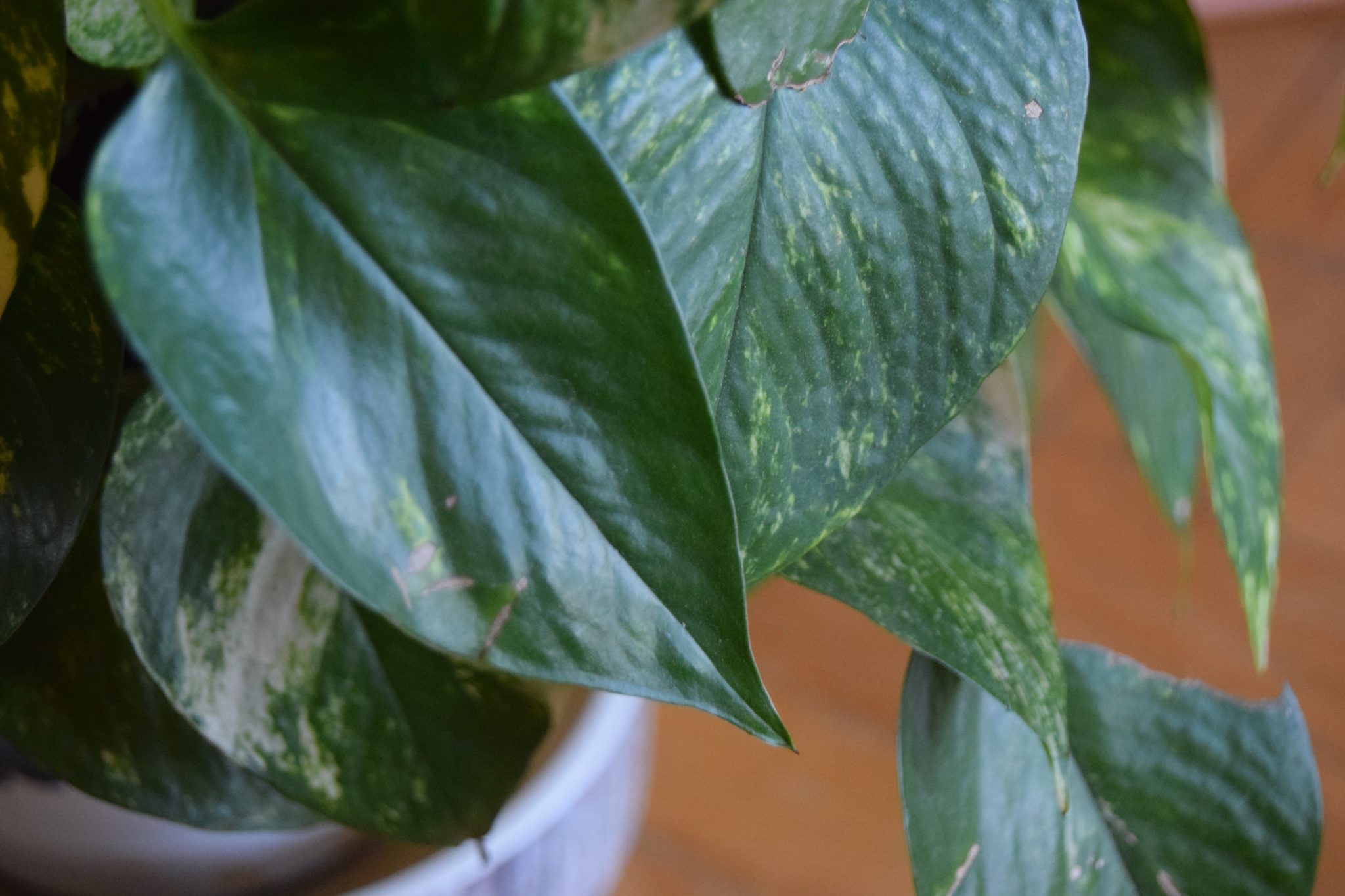
Check the soil before you change anything. UF/IFAS points out that yellow leaves alone don't diagnose a problem. A finger in the pot and a look at the stems will tell you more than leaf color can.
First, rule out old leaves and yellow varieties
Every pothos sheds leaves. UW–Madison Extension notes that "older leaves will turn yellow and drop off naturally." Say you see one yellow leaf now and then near the base of a vine, while the rest of the plant is green and firm and new leaves keep coming at the tips. That's normal aging. Pull the leaf and carry on.
Check what you're growing, too. Neon pothos is chartreuse all over, and Marble Queen is heavily splashed with cream. That color is genetic, not a sign of stress. What you're looking for is a leaf that used to be green and is now going yellow.
If several leaves are yellowing at once, or the yellow is spreading up the vines, keep reading.
If the lower and inner leaves yellow and the soil stays damp
Likely cause: overwatering. The University of Maryland Extension says "the primary symptom of excess moisture is wilting or yellowing of lower and inner leaves," and calls overwatering "the number one reason" indoor plants fail. Extra water pushes oxygen out of the soil and damages the fine roots, so the plant can't take up water even while it's sitting in it. Signs point this way when yellow leaves drop easily, the soil is still wet days after watering, and fungus gnats hover around the pot.
The fix:
- Stop watering until the top inch or two of soil feels dry. Iowa State Extension's rule is "Check for water on a schedule, don't water plants on a schedule," and if you're not sure, "wait at least one more day."
- Empty the saucer or cachepot. Roots sitting in drained water stay waterlogged.
- Check the pot. It needs a drainage hole, and it shouldn't be much bigger than the root ball. UConn's Home & Garden Education Center says an oversized pot can cause overwatering symptoms on its own. If you tend to overwater, unglazed clay dries faster than plastic.
- Learn the weight. UMD suggests lifting the pot and comparing a dry pot with a freshly watered one. For a big floor pot, push a wooden dowel to the bottom and see whether it comes up damp.
Once the soil is dry enough, water thoroughly. UConn says to keep going until, "after about a minute," water seeps from the drainage holes, then empty the saucer "within an hour or so." Don't switch to small sips. Light waterings "encourage poor, shallow root growth."
When to go further: if old, dense soil is still wet a week later, or the plant starts to wilt, check the roots.

If the plant wilts in wet soil or the stems turn black
Likely cause: root rot. Wilting in a damp pot is the most misread symptom on this list. UConn notes that when roots are lost, the plant wilts, and inexperienced owners "continue to water the plant accelerating its demise." A drooping pothos in wet soil doesn't need water. It droops because the roots that would take up water are gone.
Watch for black or mushy stems at the soil line, a sour or rotten-egg smell from the pot, and yellowing that spreads fast.
The fix:
- Slide the plant out and gently loosen the soil. Healthy roots are firm and light-colored. Rotted ones are brown or black, soft, and sometimes slimy. UW–Madison describes them as "brown or nonexistent."
- Cut away every soft, dark root. Wipe the scissor blades with rubbing alcohol before you start and between cuts so you don't spread the rot.
- Throw out the old soil. Repot into fresh, well-draining mix in a clean pot with a drainage hole, sized to the roots that are left, not the roots the plant used to have. The RHS suggests 3 parts peat-free ericaceous compost, 1 part grit and 1 part orchid bark.
- Water lightly to settle the mix, then let it get nearly dry before you water again. Don't fertilize.
When to start over instead: if almost no healthy roots are left, take cuttings. Snip a few healthy vine sections, each with a node (the bump where a leaf meets the stem), and root them in water or fresh mix, as Clemson describes. If the plant still has roots but is leggy and half bare, UW–Madison says you can cut a pothos back "to 2 inches from the soil line if necessary."
If yellow leaves feel limp or crispy and the soil is bone-dry
Likely cause: underwatering. These leaves look different from overwatered ones. They're limp, flaky or crispy rather than soft, and they tend to hang on instead of dropping. The soil is dry all the way down.
The fix: soak it. For a bone-dry pot, UConn recommends setting it in a sink or bucket of water "until air bubbles stop appearing," then letting it drain completely. After that, check the soil about an inch below the surface every few days and water when it's dry at that depth.
When to look elsewhere: roots poking out of the drainage holes mean the plant is root-bound. Clemson says to repot at that point and notes that most plants need it "once every year or two." The RHS recommends going up one pot size, ideally in spring.
If yellow leaves have brown spots or yellow halos
Brown spots usually come from one of three causes, and the shape and position of the spot help you tell which.
Soft, water-soaked spots ringed in yellow
This points to bacterial leaf spot, which Gardening Know How links to overhead watering. Move the plant away from your other houseplants right away. Cut off the spotted leaves with sterilized shears, water at the soil rather than over the leaves, and let the soil dry more between waterings. Some guides say there's no cure and the plant should go. If spots keep appearing on new growth after these steps, that may be the right call, but take clean cuttings from unaffected vines first.
Brown patches in the middle of the leaf
UW–Madison links brown patches in the center of leaves to low temperatures or abrupt temperature swings. See the section on sudden yellowing below.
Bleached or brown patches on the leaves facing the window
That's sun scorch. Pothos "does not tolerate much direct sunlight," per UW–Madison, and the RHS warns that direct sun, especially in summer, "can scorch the leaves." Move the plant back from the glass, or hang a sheer curtain in a south-facing window. Scorched spots won't heal. New leaves will come in clean.
While you're up close, turn a few leaves over. Mealybugs look like white cottony masses in the leaf joints and on the undersides. Scale looks like small bark-colored bumps. UW–Madison says spider mites are "easily controlled with thorough cleaning and frequent applications of insecticidal soap."
If the edges and tips turn brown and crispy
Likely causes: salt buildup, water quality or dry air. UW–Madison says yellowing with blackened margins or tips can come from overwatering, underwatering or too much fertilizer. Look for a white or tan crust on the soil, the saucer or the rim of a clay pot. Iowa State says that crust comes with "browning or yellowing of leaves."
The fix:
- Flush the soil. In a sink or tub, water thoroughly and let it pour out the drainage holes to wash out the salts. If the crust is heavy, Iowa State suggests repotting into fresh mix.
- Pause the fertilizer. Epic Gardening suggests waiting "at least a few weeks." When you start again, Iowa State recommends half or quarter strength, and only while the plant is actively growing.
- Look at your water. UConn says chemicals in municipal water can brown leaf tips and margins, and letting the water sit "a day or so" before you use it helps. Skip softened water. It adds sodium salts that build up in the soil.
Humidity gets more blame for brown tips than it deserves. Clemson ties tip dieback to low humidity or intense light. It says pothos prefers 50 to 70% humidity but tolerates the 30 to 60% found in an average home, and the RHS says pothos doesn't need high humidity at all. Sort out the watering, salts and light first. If the plant sits near a heater after that, a pebble tray or a group of plants around it can help.
If new growth is pale, small, or losing its variegation
Likely causes: low fertility or too little light. Low fertility is Clemson's other main cause of yellowing, and Gardening Know How links yellowing lower leaves to a lack of nitrogen. Too little light shows up as small leaves, long bare stretches of vine, and patterned varieties turning plain green. The RHS lists lost variegation and poor growth as signs of low light.
The fix: give the plant bright, indirect light. The RHS suggests an east- or west-facing window, or a south-facing one behind sheer curtains. Pothos tolerates low light, but it won't grow well there. Then feed during the growing season. Clemson recommends every other month in spring and summer, and the RHS feeds monthly from April to October. Either schedule works, as long as you use diluted fertilizer while the plant is growing and none in winter.
When not to feed: if the soil is soggy or the roots are damaged, fix that first. Illinois, UW–Madison and Iowa State all advise against feeding a stressed plant.
If the yellowing hit suddenly after a move, a repot, or a cold snap
Likely cause: shock. Oklahoma State Extension lists "temperature shock" among the usual reasons pothos leaves yellow and drop, and notes that plants often shed leaves when they move from a greenhouse into a home. A pothos carried home from the nursery on a cold day, or pushed against a frosty window in late November, may lose a few leaves.
A repot can bring on some yellowing too, especially if roots tore or the new pot is much bigger than the old one. None of the sources covers repotting stress directly. A reasonable way to think about it: the plant has fewer working roots for a while, and a big pot of wet soil makes things harder.
The fix: keep conditions steady. Clemson recommends 60 to 70°F at night and 70 to 85°F during the day. It also says to keep pothos away from windowsills and heating vents in winter and from air-conditioning vents in summer. After a repot, wait until the soil starts to dry before watering again, and skip fertilizer for now. Then leave the plant where it is. Moving a stressed pothos from spot to spot only adds another shock.
When to worry: a few yellow leaves after a change is normal. If the yellowing keeps spreading for more than a couple of weeks after things settle, check the soil and roots as described in the overwatering and root-rot sections.
Watering pothos through the winter
Late fall is when a lot of pothos plants start to struggle. The light weakens, growth slows and the soil stays wet much longer, but the watering habit stays the same. UVM Extension notes that people tend to overwater, especially in winter. Illinois Extension describes houseplants as "coasting" this time of year: "You will be watering less often."
A good winter routine:
- Check the soil about once a week, and water only when the top inch or two is dry. Expect that to take a lot longer than it did in summer.
- Keep the soil on the dry side, but don't let the plant wilt. Illinois says plants "should never wilt."
- Plants in south- or west-facing windows dry faster than those in east- or north-facing ones, so check each one on its own.
- Stop fertilizing until spring. Illinois: "Do not give plant food while the houseplants are inactive."
- Keep pots away from heater vents and cold glass, especially on freezing nights.
Should you cut yellow leaves off your pothos?
Yes. Asked whether a yellow leaf can turn green again, Epic Gardening answers "no, not in most cases." Removing it tidies the plant, and if disease is involved, it gets infected tissue away from the healthy leaves.
Fully yellow leaves usually come off with a gentle tug. If one doesn't, snip the leaf stalk where it meets the vine with clean, sharp scissors. Wipe the blades with rubbing alcohol before and after if you suspect leaf spot or rot. A leaf that's only partly yellow can stay until it turns completely, if it doesn't bother you.
Wear gloves for a big cleanup, as the RHS advises. UW–Madison notes that the sap can irritate skin, and Clemson warns that all parts of the plant are mildly toxic if eaten. Pothos contains calcium oxalate, which can cause mouth and throat irritation, vomiting and difficulty swallowing, so keep it away from children, dogs and cats. Pick up trimmed leaves right away instead of leaving them on the floor.
Skip leaf shine products. Iowa State recommends a damp cloth or a gentle shower instead.
How long recovery takes
Leaves that are already yellow won't recover, so don't measure progress by them. Watch the growing tips. A fresh, healthy leaf unfurling means the fix is working.
Epic Gardening says a pothos usually improves "within a few weeks" once you correct the problem. That's a fair expectation for watering, light or fertilizer fixes during the growing season, though none of the extension sources gives a timeline. A plant recovering from root rot, or any pothos coasting through a dim winter, can take longer, sometimes until growth picks up in spring. Expect a few more old leaves to yellow along the way.
Since overwatering is the most common cause, the most useful habit is simple: before every watering, push a finger an inch into the soil, and if it still feels damp, wait.
Sources
- How to Grow Pothos Indoors (Epipremnum spp.): Care, Cultivars & Common Problems – Clemson HGIC
- Pothos, Epipremnum aureum – UW–Madison Extension
- How to grow epipremnum – RHS
- Yellowing Leaves on Indoor Plants – University of Maryland Extension
- Overwatered Indoor Plants – University of Maryland Extension
- Houseplants, winter watering, and humidity – University of Illinois Extension
- Houseplant Watering Recommendations – UConn Home & Garden Education Center
- Diagnosing Houseplant Problems Related to Poor Culture – Iowa State Extension
- Pothos Leaves Turning Yellow? Here's Why, and How To Fix It – Epic Gardening
- Yellow Leaves On Your Pothos? 7 Common Causes & Fixes – Gardening Know How
- Houseplant Care – Oklahoma State Extension
- Houseplant care during winter months – UVM Extension
- Diagnosing houseplants 101: Is your plant diseased or just overwatered? – UF/IFAS
Our articles are researched with the help of digital tools and written, fact-checked and edited by our team before publishing.